
Why Is Stainless Steel Pipe Rusting? Common Causes and How to Prevent It
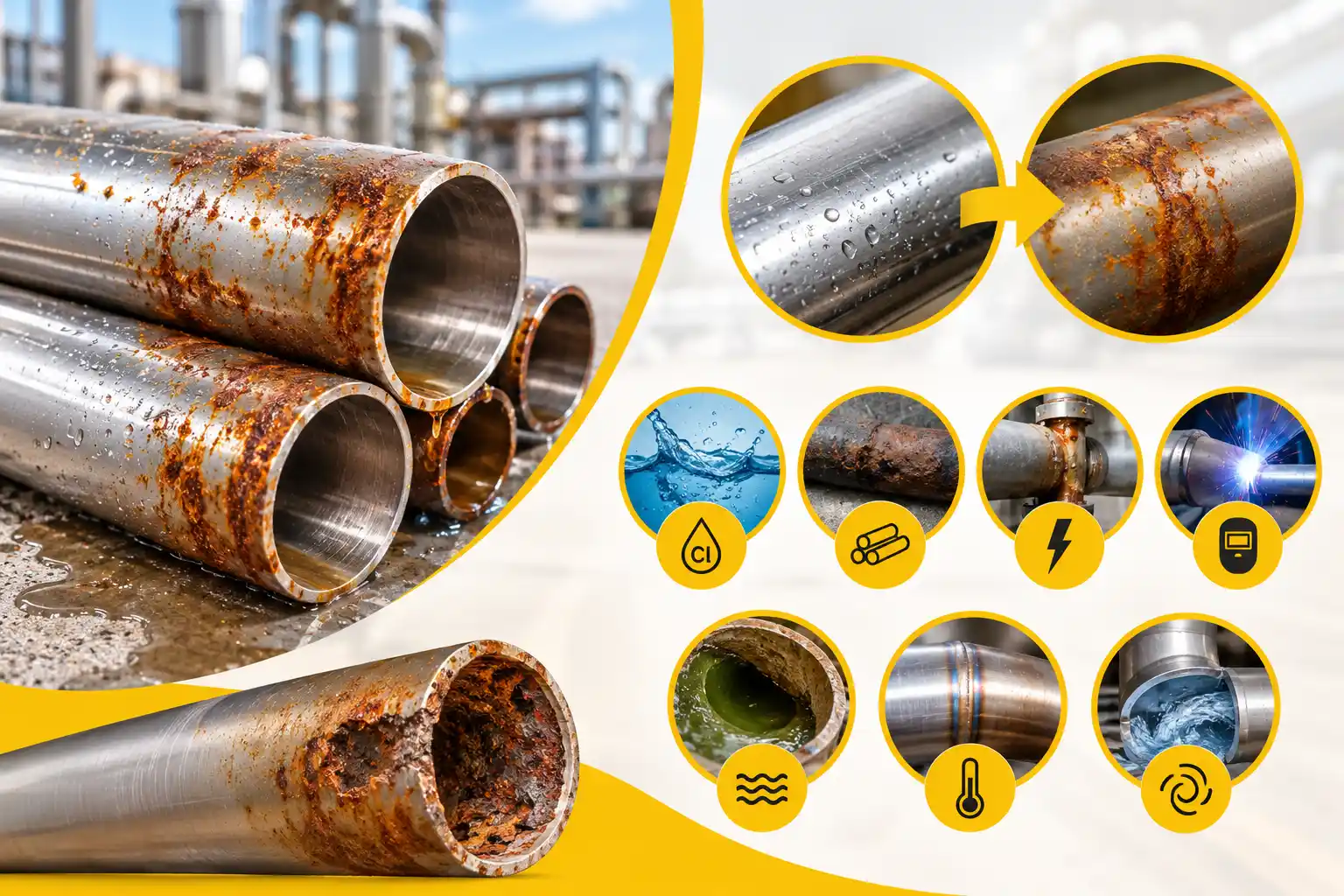
Stainless steel pipe is widely used because it offers good resistance to corrosion, but it is not completely rust-proof. Under certain conditions, stainless steel can develop brown stains, pits and even leaks.
Stainless Steel Pipe is used in many industrial applications, but its performance depends on the grade, water or process fluid, fabrication quality and operating environment.
Rust can develop when the pipe is exposed to high chloride levels, aggressive water, carbon-steel contamination, poor welding practices or an unsuitable stainless steel grade.
If your stainless steel piping has started rusting, replacing it immediately may not solve the problem. First, identify what is causing the corrosion.
Common causes include:
- Chlorides and aggressive water
- Carbon-steel contamination
- Galvanic corrosion
- Welding and heat-related contamination
- Stagnant water and deposits
- Incorrect stainless steel grade
- Turbulence and localized corrosion
Understanding the cause helps you choose the right solution and avoid the same problem with replacement pipe.
Why Stainless Steel Pipe Can Rust Despite Being Corrosion Resistant
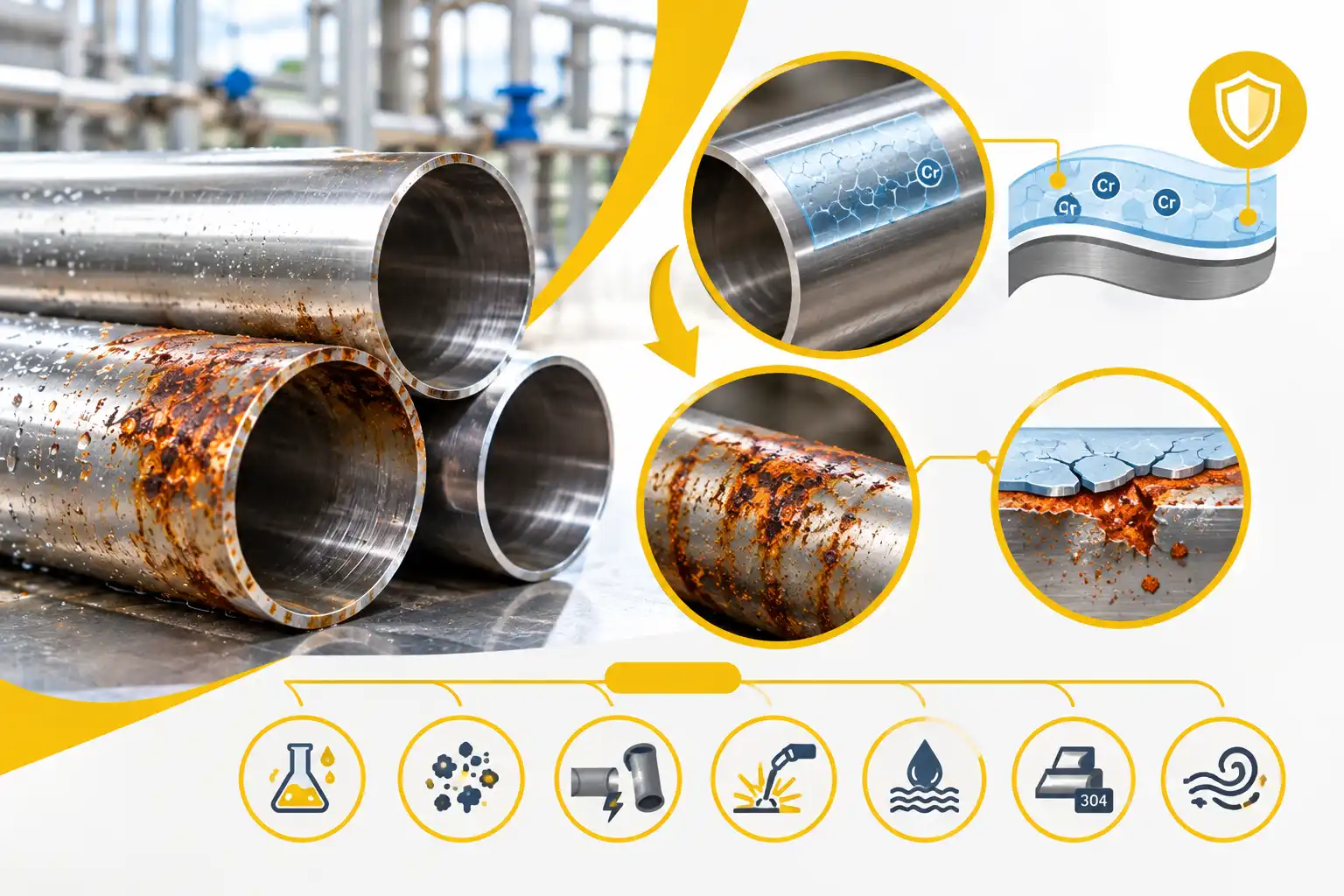
Stainless steel contains chromium, which forms a thin protective layer on its surface. This layer helps protect the metal from corrosion.
However, this protective layer can be damaged or weakened by certain chemicals, contaminants and operating conditions.
Stainless Steel Is Not Completely Rust-Proof
The word "stainless" does not mean that the material can never corrode.
Different stainless steel grades provide different levels of corrosion resistance. A grade that performs well with normal water may not perform as well when exposed to chlorides or aggressive chemicals.
This is why the pipe grade should match the actual application.
Chlorides Can Cause Pitting
Chlorides are an important cause of localized corrosion in stainless steel.
They can attack the protective surface and create small pits. These pits may become deeper over time and eventually cause leakage.
Groundwater, coastal water and some industrial process fluids can contain significant chloride levels.
The Stainless Steel Grade Makes a Difference
Choosing the correct grade is an important part of preventing corrosion.
For many general applications, 304 stainless steel can provide suitable corrosion resistance when the environment is not highly aggressive.
For applications with higher chloride exposure or more demanding conditions, 316L may be considered because it generally provides better resistance to localized corrosion than 304.
The final selection should be based on the actual fluid, temperature and operating conditions.
Common Causes of Stainless Steel Pipe Rusting
Rust on stainless steel pipe does not always mean that the pipe material itself is defective. The problem can come from fabrication, installation, water chemistry or contact with other metals.
Carbon Steel Contamination During Fabrication
Carbon steel particles can become attached to stainless steel during cutting, grinding, handling or fabrication. These iron particles can later oxidize and create brown or orange rust marks on the stainless surface.
This can make the pipe look like it is rusting even when the stainless steel underneath has good corrosion resistance. To reduce this risk, stainless steel should be handled separately from carbon steel whenever practical.
Galvanic Corrosion From Other Metals
Stainless steel can come into contact with other metals through flanges, bolts, supports, valves and fittings. When different metals are electrically connected in the presence of water, galvanic corrosion can occur under suitable conditions.
If corrosion is mainly visible around a connection, inspect the other metal components as well. The problem may be related to the complete piping assembly rather than the stainless steel pipe alone.
Welding and Heat-Related Contamination
Welding can affect the condition of stainless steel around the weld area. Heat tint, weld contamination and poor cleaning can leave the surface more vulnerable to corrosion.
This is particularly important when the inside of the pipe carries water, chemicals or other corrosive fluids. Proper welding procedures, shielding, cleaning and suitable post-weld treatment can help reduce these risks.
How the Operating Environment Can Accelerate Corrosion
The same stainless steel pipe can perform well in one installation and develop corrosion in another. The difference may come from the fluid, temperature, flow conditions or contaminants present in the system.
Stagnant Water and Low-Flow Areas
Water that remains in one location for long periods can create conditions that encourage localized corrosion. Dead legs, low-flow sections and areas where deposits collect should be inspected carefully.
Biological activity can also contribute to corrosion in some water systems. If corrosion repeatedly appears in low-flow areas, investigate the operating conditions instead of simply replacing the damaged section.
Groundwater and Chloride-Rich Water
Groundwater does not have the same chemistry everywhere. Some groundwater contains higher levels of chlorides, salts and other dissolved substances that can affect stainless steel.
If pipe carrying groundwater develops pits or leaks, testing the water can help determine whether the environment is contributing to the problem. This is especially useful when corrosion appears unexpectedly in a relatively new installation.
Turbulence and High Flow
High flow speeds and turbulence can contribute to localized damage in some piping systems. Pay particular attention to areas around:
- Elbows
- Reducers
- Valves
- Pump outlets
- Changes in pipe direction
If corrosion or wall loss is concentrated around these areas, flow conditions should be checked along with material selection and water chemistry.
How to Prevent Stainless Steel Pipe From Rusting
Preventing corrosion starts with material selection and continues through fabrication, installation and maintenance. A corrosion-resistant pipe can still develop problems if it is exposed to unsuitable conditions or contaminated during fabrication.
Select the Correct Stainless Steel Grade
Start by understanding the actual service conditions. Check:
- Fluid or water chemistry
- Chloride concentration
- Operating temperature
- Operating pressure
- Flow conditions
- Chemical exposure
- Cleaning chemicals
- Outdoor or marine exposure
- Required service life
For suitable general applications, 304 stainless steel may be sufficient. For more demanding environments, particularly those involving chlorides, 316L may provide better corrosion resistance depending on the complete service conditions.
This is where choosing the correct SS 304 Pipe or SS 316L Pipe for the application becomes important. The grade should not be selected only because it is cheaper or more readily available.
Avoid Carbon Steel Contamination
Stainless steel should be handled carefully during fabrication and installation. Avoid using contaminated tools or work surfaces that have been heavily exposed to carbon steel. Important areas to control include:
- Cutting tools
- Grinding wheels
- Storage racks
- Lifting equipment
- Work tables
- Abrasive materials
Keeping stainless steel clean during fabrication helps prevent surface contamination that can later appear as rust.
Clean and Passivate the Surface
Cleaning removes dirt, iron particles and other contaminants from the stainless surface. Depending on the application and fabrication method, pickling and passivation may also be required after welding or other fabrication work.
Proper surface treatment helps maintain the protective passive layer of stainless steel. For critical piping systems, fabrication and finishing procedures should be matched to the service requirements.
What to Check When Stainless Steel Pipe Starts Rusting
Do not immediately assume that the entire piping system needs to be replaced. First, identify where the corrosion is occurring and look for a pattern.
Inspect the Pipe and Connections
Check the pipe body as well as connected components. Look closely at:
- Welded joints
- Flanges
- Couplings
- Valves
- Pipe supports
- Elbows
- Low-flow sections
- Areas exposed to moisture
Small surface stains and deep pits can have very different causes. The location and appearance of corrosion can provide useful clues about what is happening.
Check the Material and Operating Conditions
Collect basic information about the existing installation. This can include:
- Stainless steel grade
- Pipe schedule and dimensions
- Water or process-fluid chemistry
- Chloride concentration
- Operating temperature
- Flow conditions
- Welding method
- Maintenance history
This information helps determine whether the problem is related to material selection, fabrication or the operating environment. If possible, compare the actual service conditions with the original material specification.
Know When Pipe Replacement Is Necessary
Cleaning may be enough when corrosion is limited to surface contamination. However, replacement may be necessary when the pipe has serious pitting, significant wall loss, repeated leakage or an unsuitable material grade.
The replacement should be selected according to the actual application rather than simply using the same material again. Depending on the project, buyers may need to compare options such as SS 304 Pipe, SS 316L Pipe and Stainless Steel Seamless Pipe based on grade, construction, dimensions and service requirements.
Before ordering replacement material, confirm:
- Grade
- Outside diameter or nominal pipe size
- Schedule or wall thickness
- Applicable standard
- Required quantity
- Testing requirements
- Material documentation
Before You Replace a Rusting Stainless Steel Pipe
Before replacing a rusting stainless steel pipe, identify the actual cause of the corrosion. Check the grade, water or process-fluid chemistry, fabrication practices, connections and operating conditions.
Replacing the pipe without fixing the underlying problem can lead to the same corrosion again.
Choosing the right stainless steel grade and maintaining proper fabrication, installation and cleaning practices can help reduce premature corrosion, leakage and maintenance costs.